9.3.2026
Hugging Face + Nvidia: Building (Actually!) Open American AI



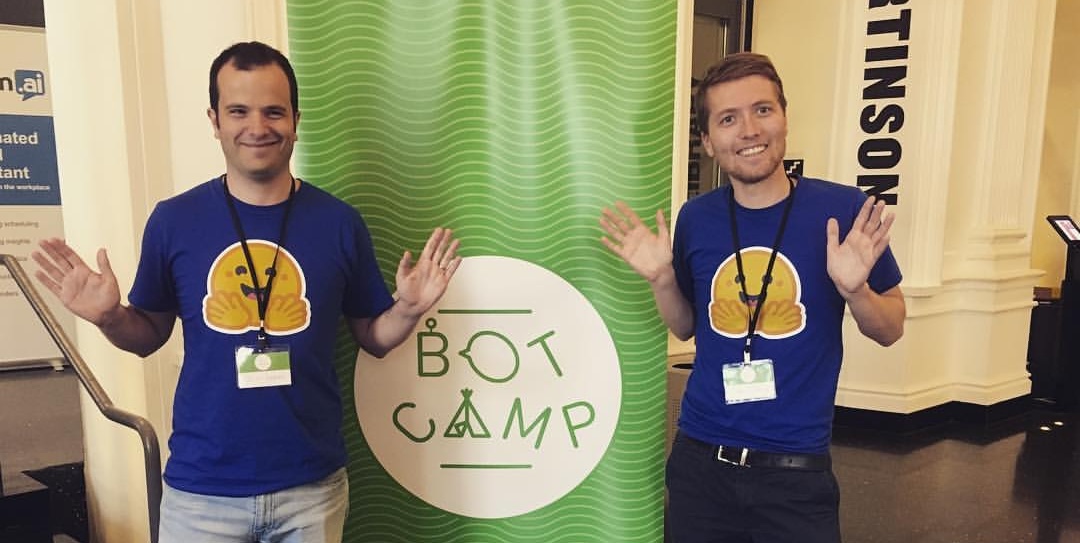
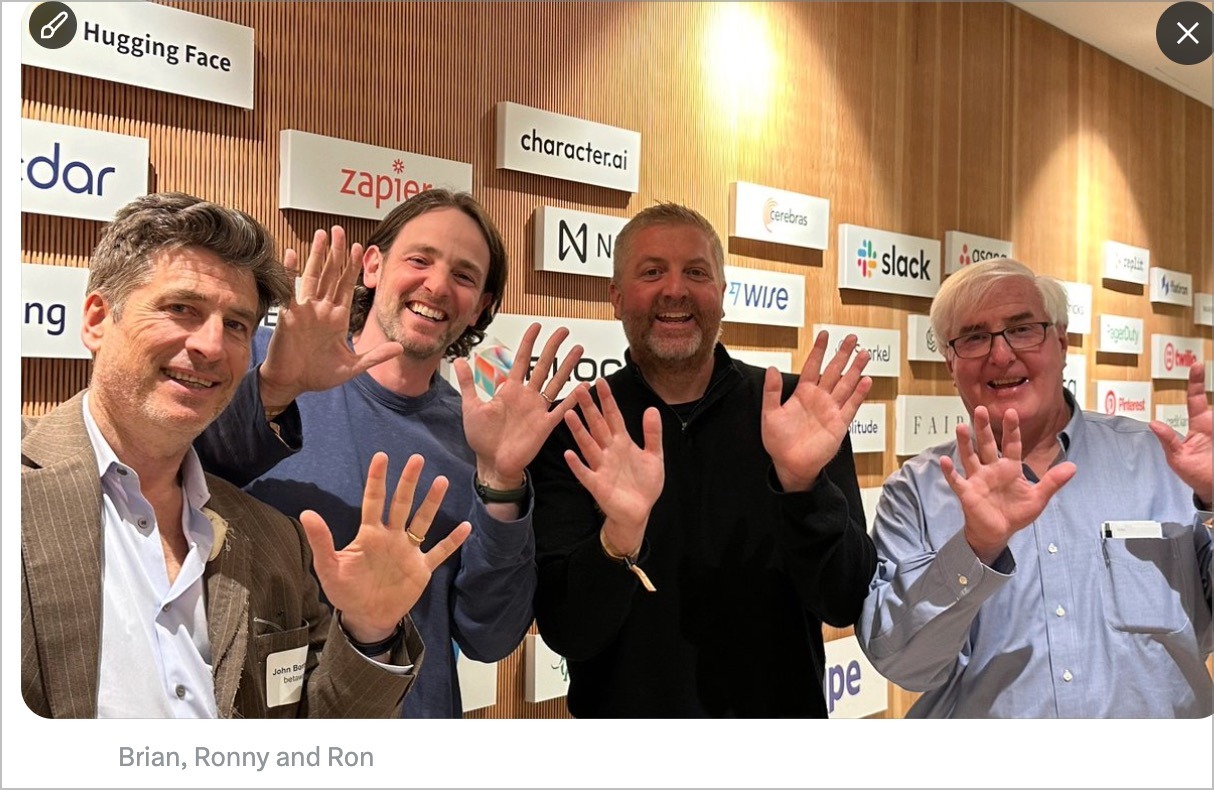
Congratulations to Clem, Julien, Thomas and to the Hugging Face team. Betaworks was the very first investor and it has been a privilege to work with you, thank you. And… Congratulations, Jensen – they are a brilliant team and community and through this acquisition you are kicking open the door for us to build a scaled, robust, American open source AI ecosystem as a counterweight to closed.
Nvidia occupies a unique position in the emerging AI stack. This acquisition accelerates the transition that has taken place over the past year from a monolithic singular AI to a distributed and diversified AI ecosystem, that is part open and part closed, that lives on the cloud, on your hardware, that is both large and small. This will benefit the economy alongside the massive community of AI builders that Hugging Face has on their platform. It is brilliant for them — for open source AI — for America, for the AI stack. It is also brilliant for New York, as a tech city that has long supported and invested in an open stack and in open alternatives.
Last year in a letter to our investors we flagged the AI hinge moment: "AI should be on American rails. But the focus on closed foundation models misses the other half of the equation, which is America's real superpower. The US has a distributed, open startup ecosystem that is maniacally building and innovating around the core of open models. The depth and breadth of this innovation wave will secure US leadership in AI" – or as Jensen put it:
We "need a frontier AI ecosystem — the best open and closed models, force-multiplied by a global community. During the Hugging Face incident, closed AI blocked essential forensics. An open-weight frontier model helped contain the intrusion." Jensen Huang (July 2026)
Today Hugging Face is the leading platform for open source AI. The platform is a home for millions of AI builders. It didn't start that way.
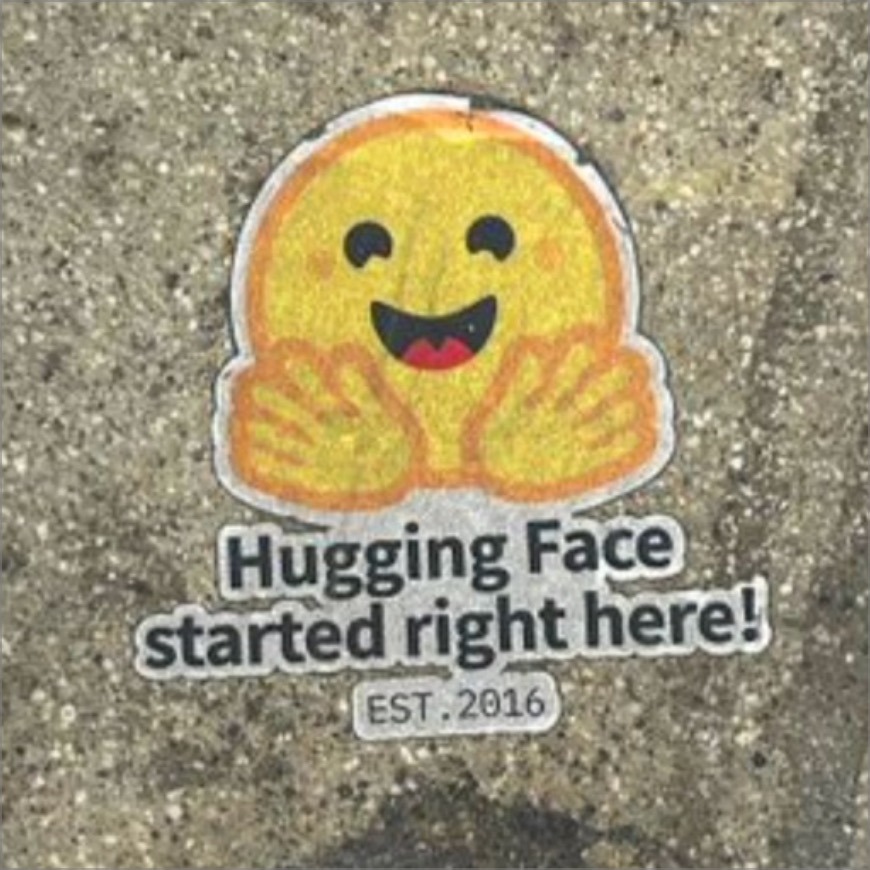
The Start
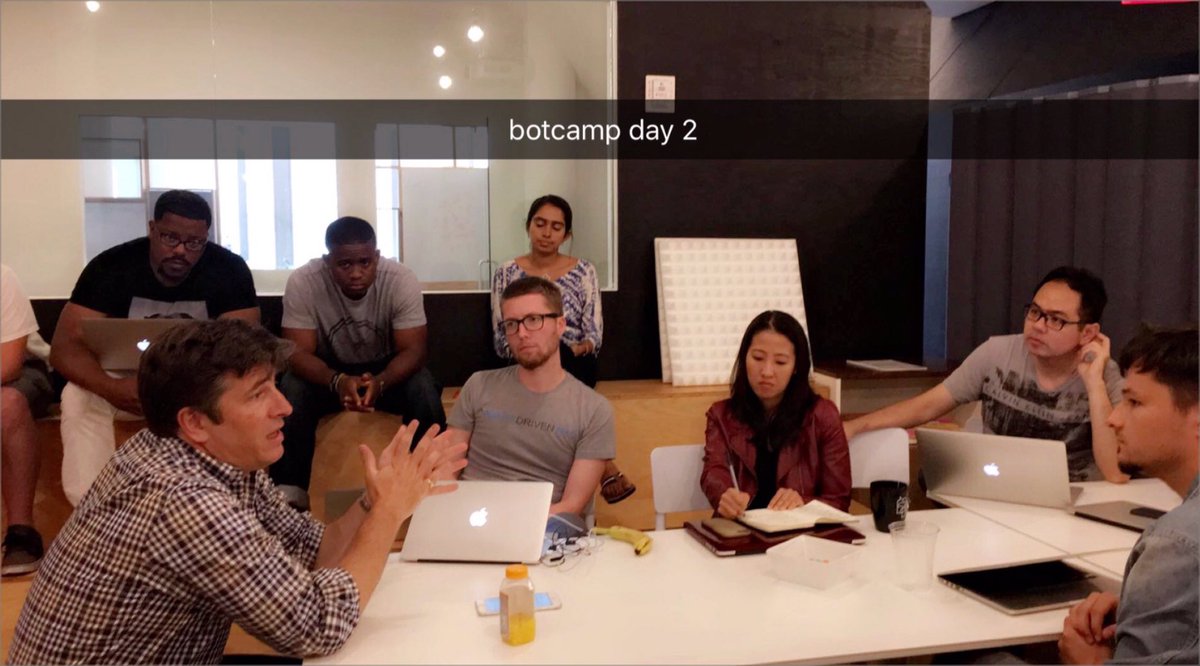
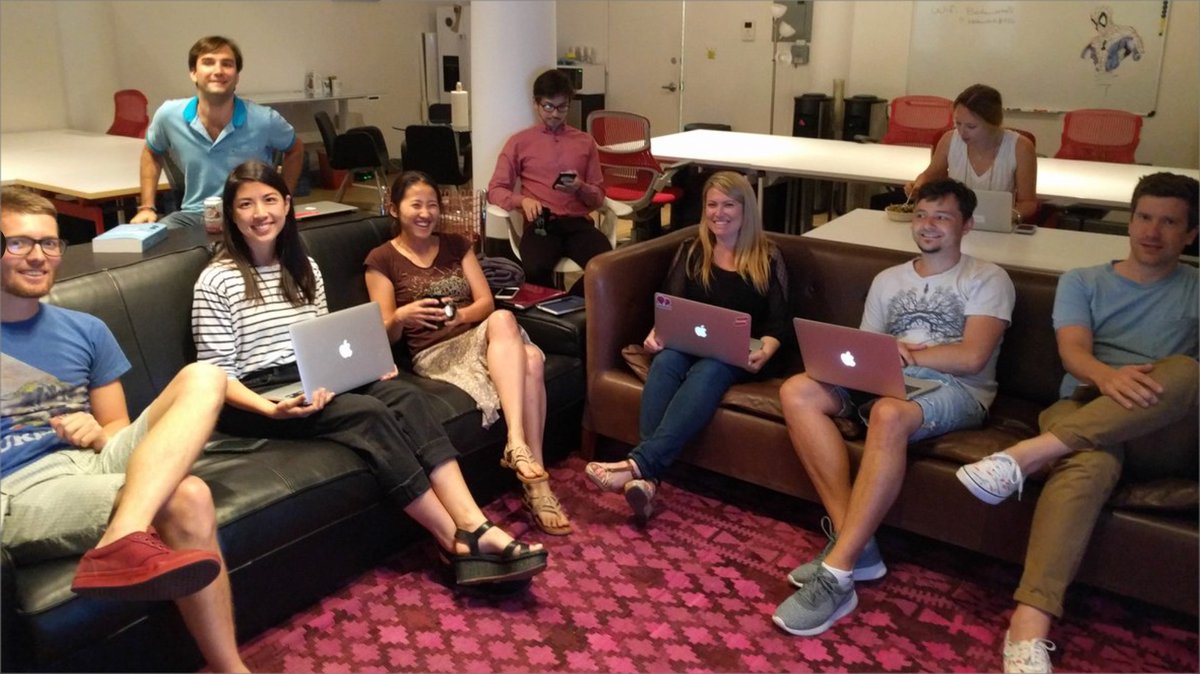
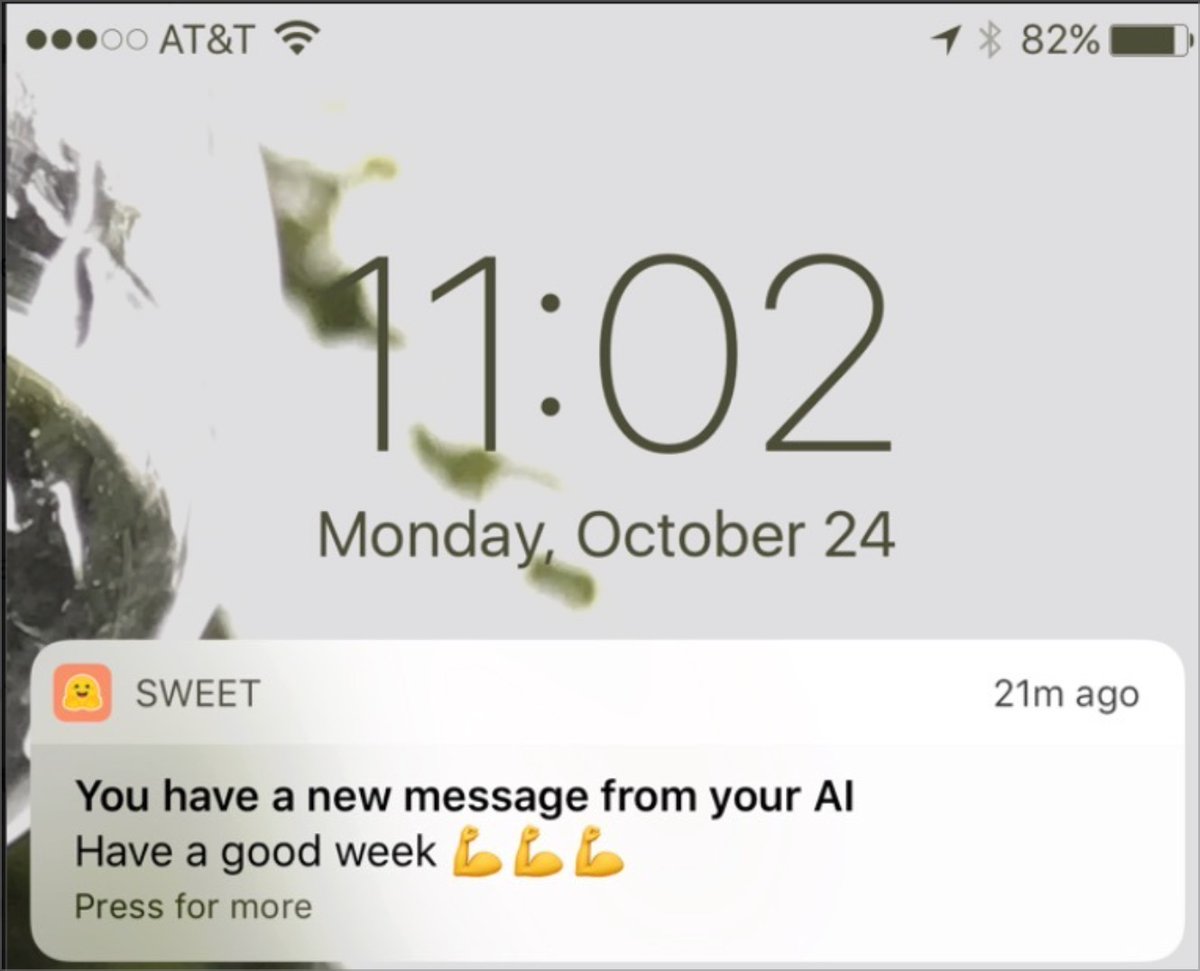
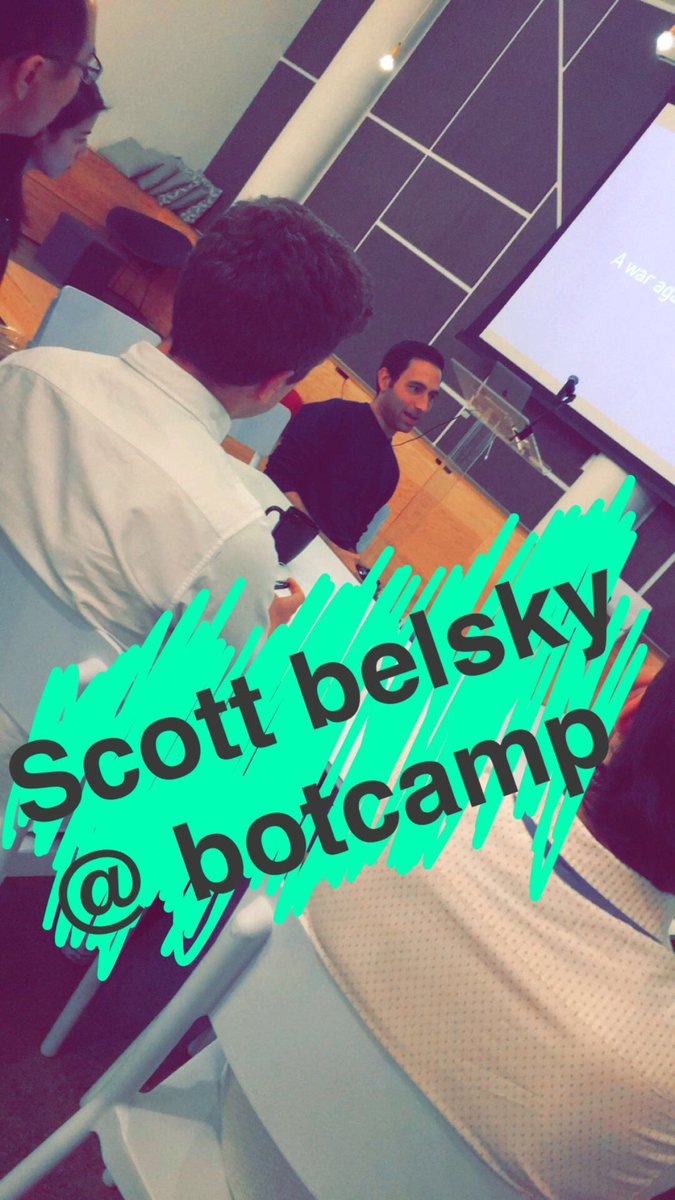
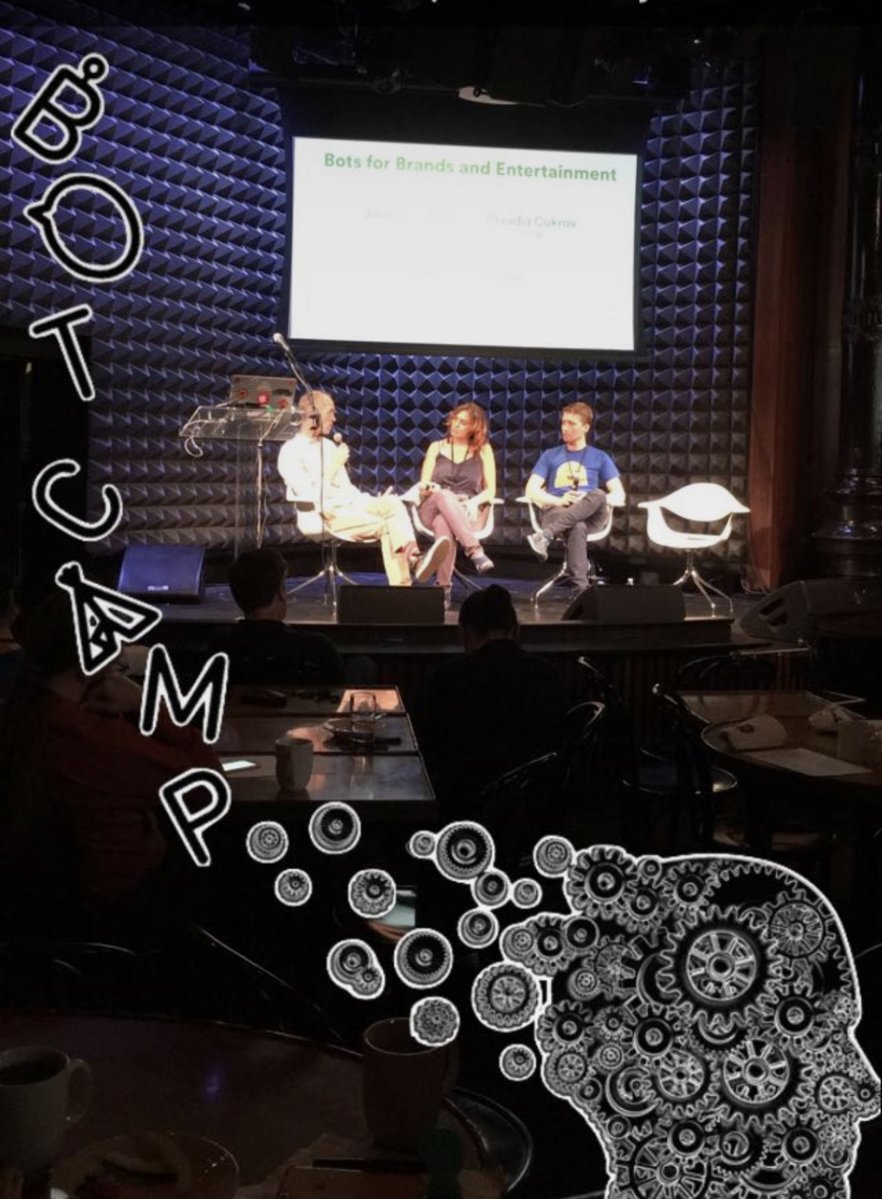
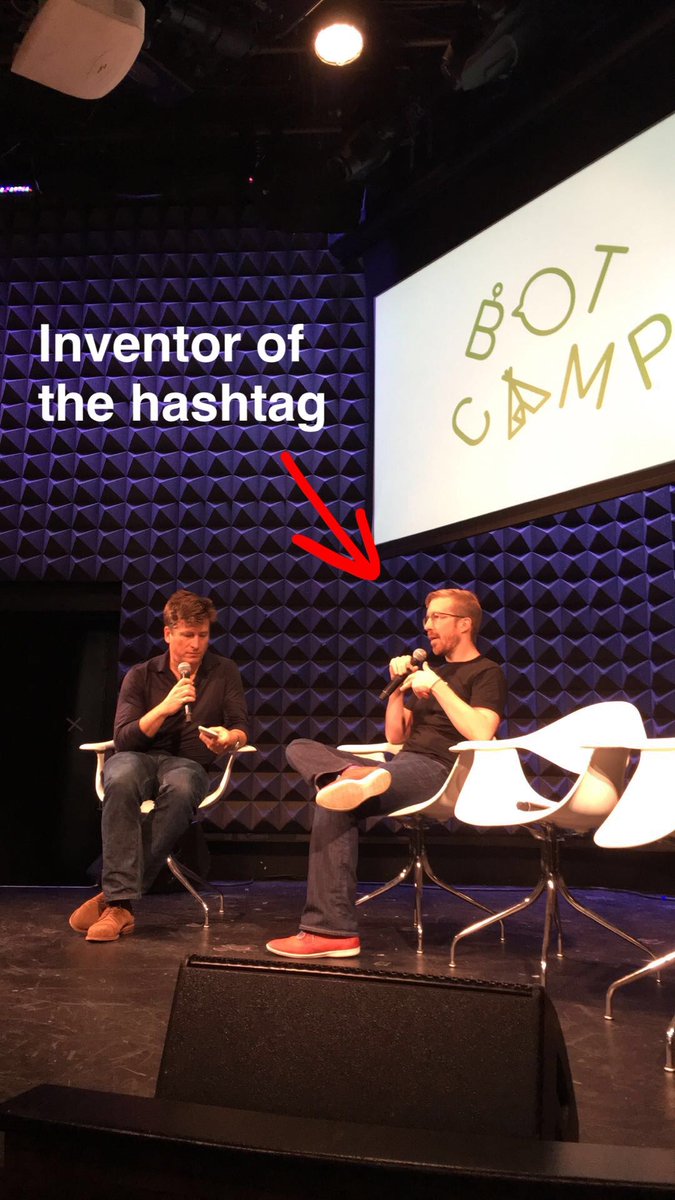
Clem and Julien came to betaworks in 2016 to build Hugging Face for botcamp. And Hugging Face v1 was a chat bot. It is hard to recall what chat bots were like in 2016 but most of them were verticalized and narrowly directed. At Betaworks we created one called Poncho focused on the weather. Yet Clem and Julien wanted to build a more general chat system. The NLP Chatbot model they designed was more open ended. It was a generalized chat companion at a time when most of the chat bots were focused on intent extraction (if they weren’t just a pile of regular expressions) for a specific application.
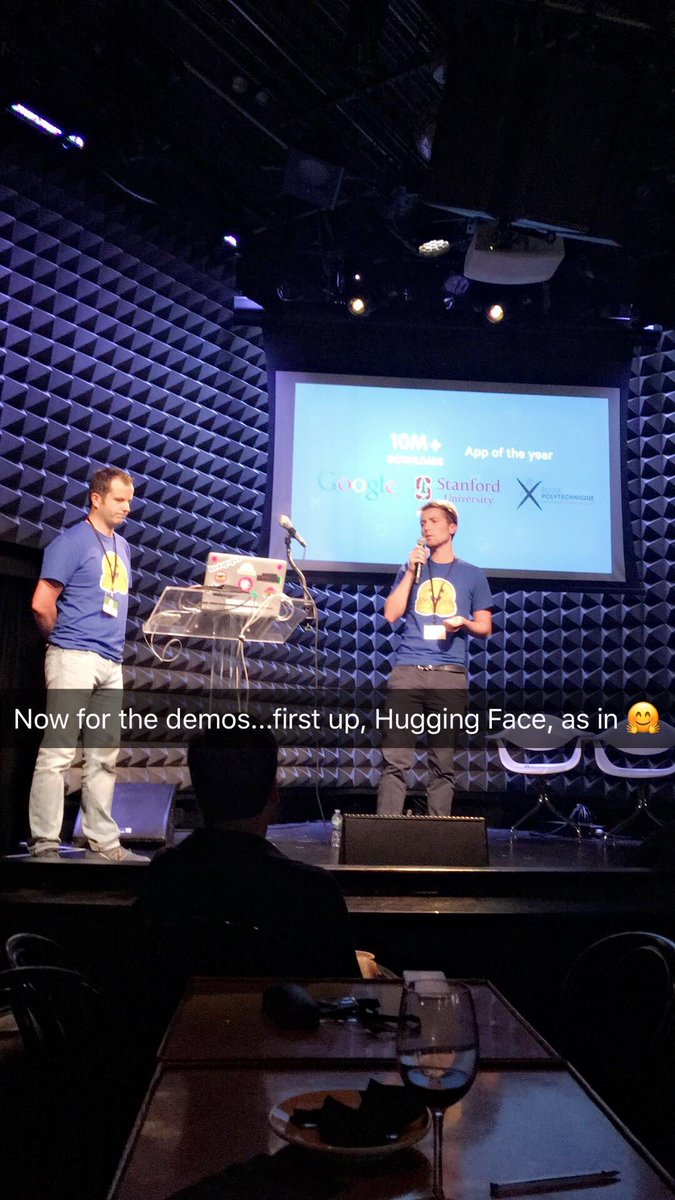
Furthermore, they didn't believe in a singular or monolithic AI. From the beginning the vision was you would name your own AI and start to build your own model. Here are Clem and Julien in 2016 at betaworks demo day:
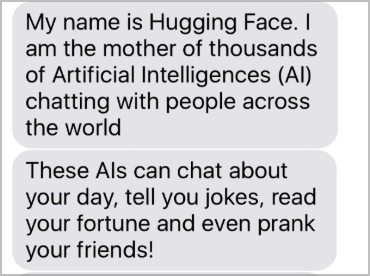
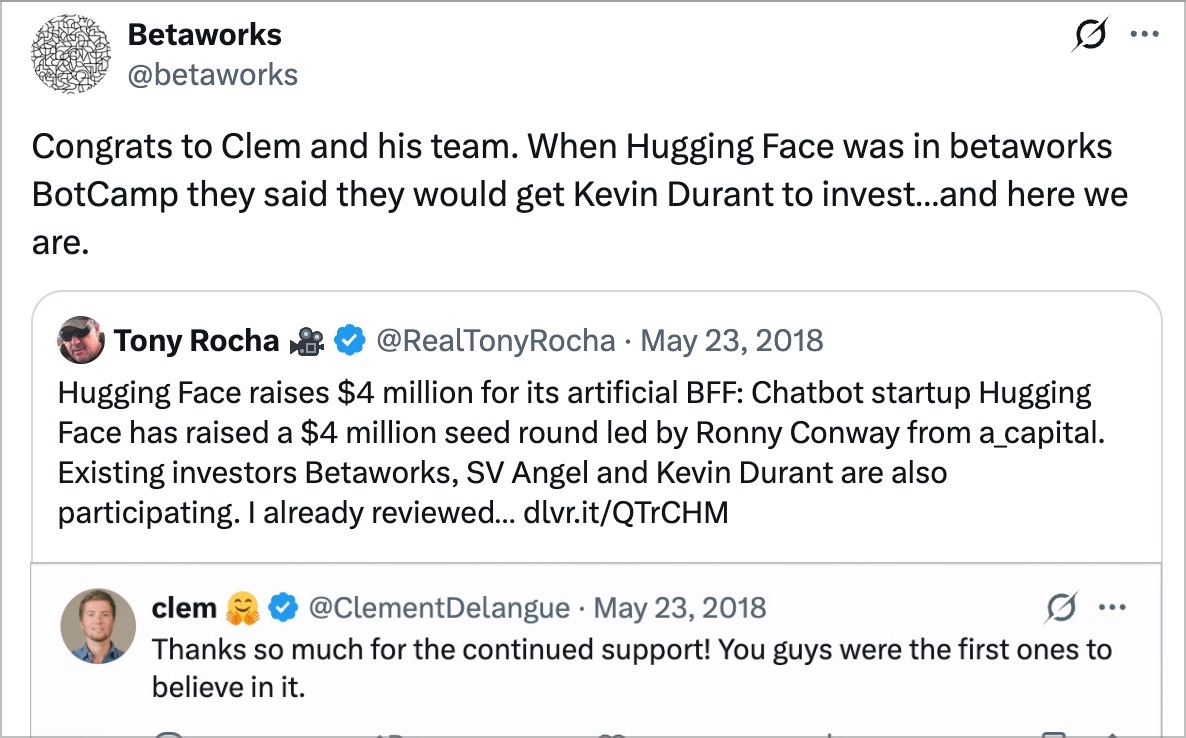
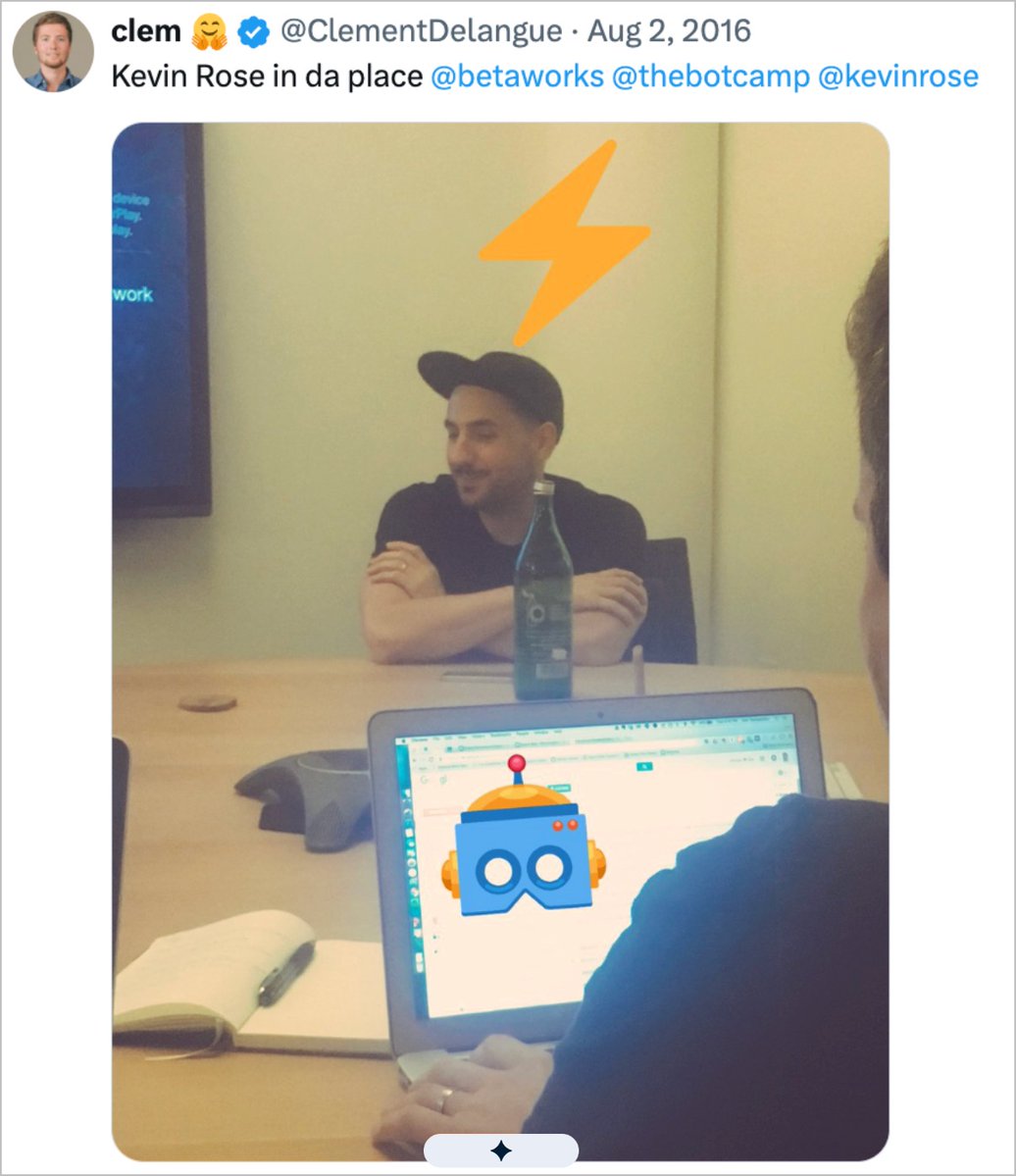
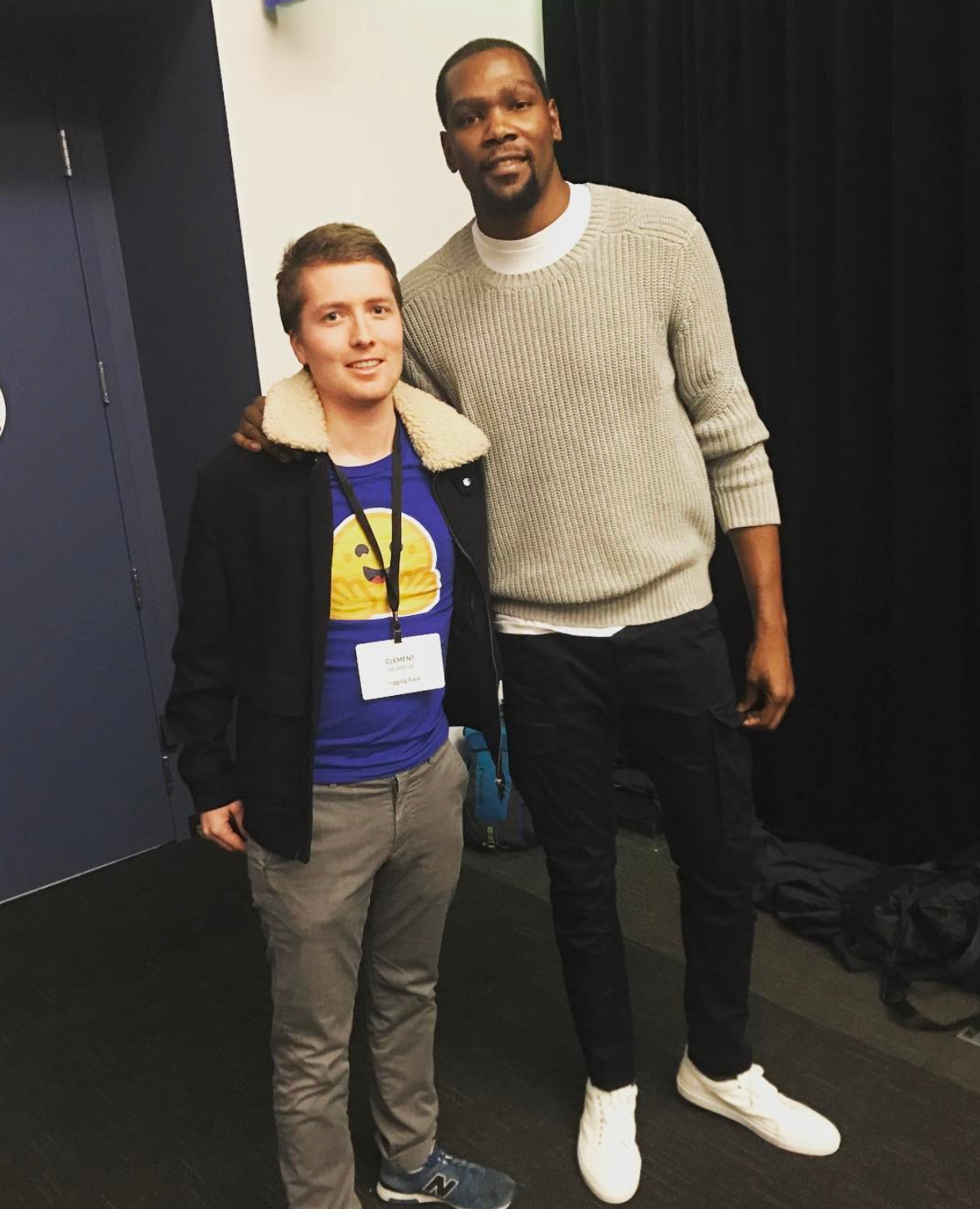
Post Demo Day, there was strong user growth. They started doubling active users every month and users were exchanging a million+ messages with their AI friends every day. And there were weird and interesting hacks: someone wired up two bots to chat with each other and melted down the servers. They worked out of Betaworks for months and decided to HQ the company in New York. And early in 2017, they closed seed funding from our friends at SVA & A-Capital and a handful of angels including Kevin Durant (see picture below of Clem and Kevin).
Throughout this, Clem, Julien, and Thomas were working with, tuning, and trying all of the successive generations of NLP models. Less than a week after Google released BERT, the transformer-based language model, the Hugging Face team open-sourced a PyTorch implementation. From this point on, they decided to pivot the company to becoming a platform for open-source AI. It was clear that the product was far bigger than a single chatbot. They open-sourced the original app and released the transformers library.
By the summer of 2019, things took off. Josh at Lux and Lee at Addition joined as investors as the company became the leading platform for open source models and data.
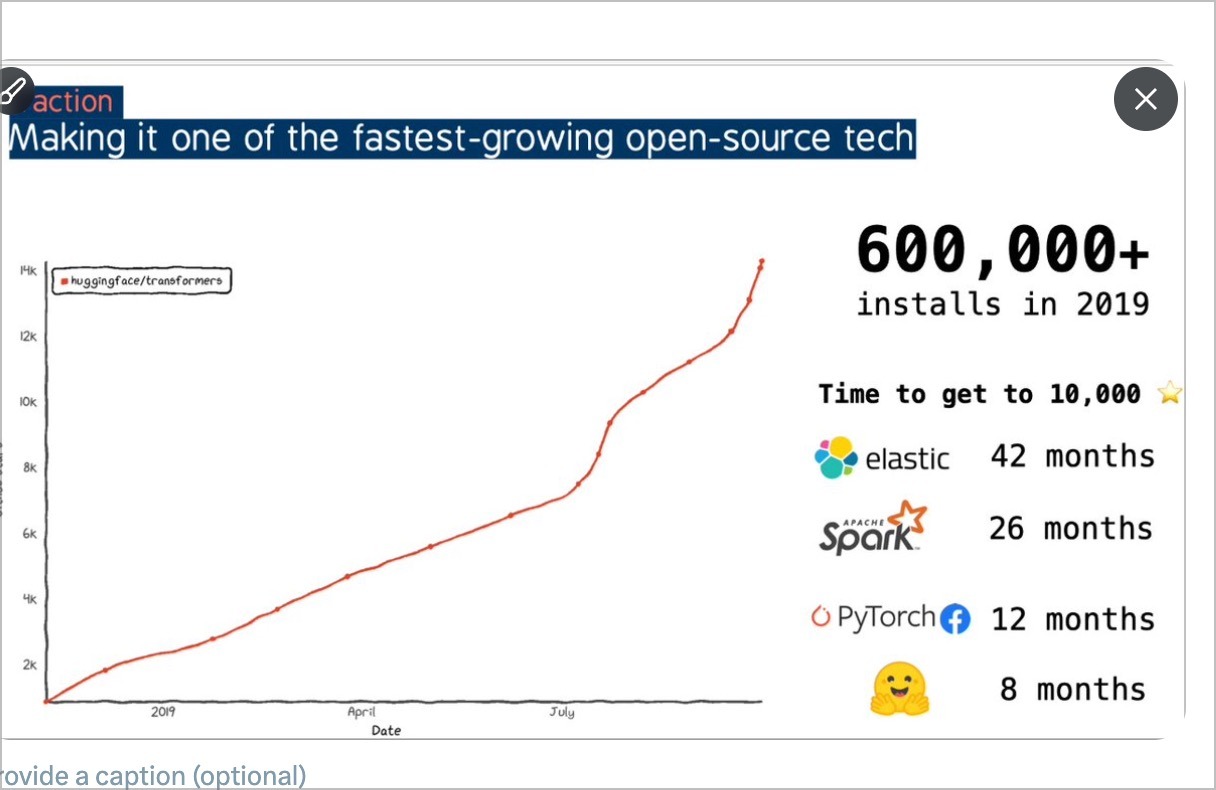
Clem, Thomas, and Julien have a deep pragmatic vision for AI. Their focus has been expanding access for AI builders — to models and data small and large, local and cloud. Investing in open systems and open science. They believe in and are building a stack where open and closed systems work together. And they reject the narrative, sown by other companies, that open = dangerous and closed = "safe", as simplistic at best and marketing at worst. To the contrary, they believe, as I do, that the way we build resilient technology is through a mix and through variability.
We saw this last month when Hugging Face was hacked by a swarm of OpenAI agents — collective is how the agents self-identified. And when the Hugging Face team realized that closed models had imposed guardrails preventing them from tracking and stopping the incursion, they knew the solution was to use open source tools. While the event was unprecedented it was expected – and it highlighted once again the criticality of open source to the ecosystem. The most resilient tech we have today, from the Linux kernel that runs most of the internet to bitcoin, is open source.
Look back to Clem's series A pitch deck, or the botcamp pitch, or the startup he did when he was still at University. The Hugging Face team have always had a profound belief in the importance of open systems and open science as a complement to closed systems. This shows up everywhere: live-tweeting events (for Clem he used to live tweet his classes), shared Google Docs for board updates…all the way to public disclosure of the recent agentic hack.
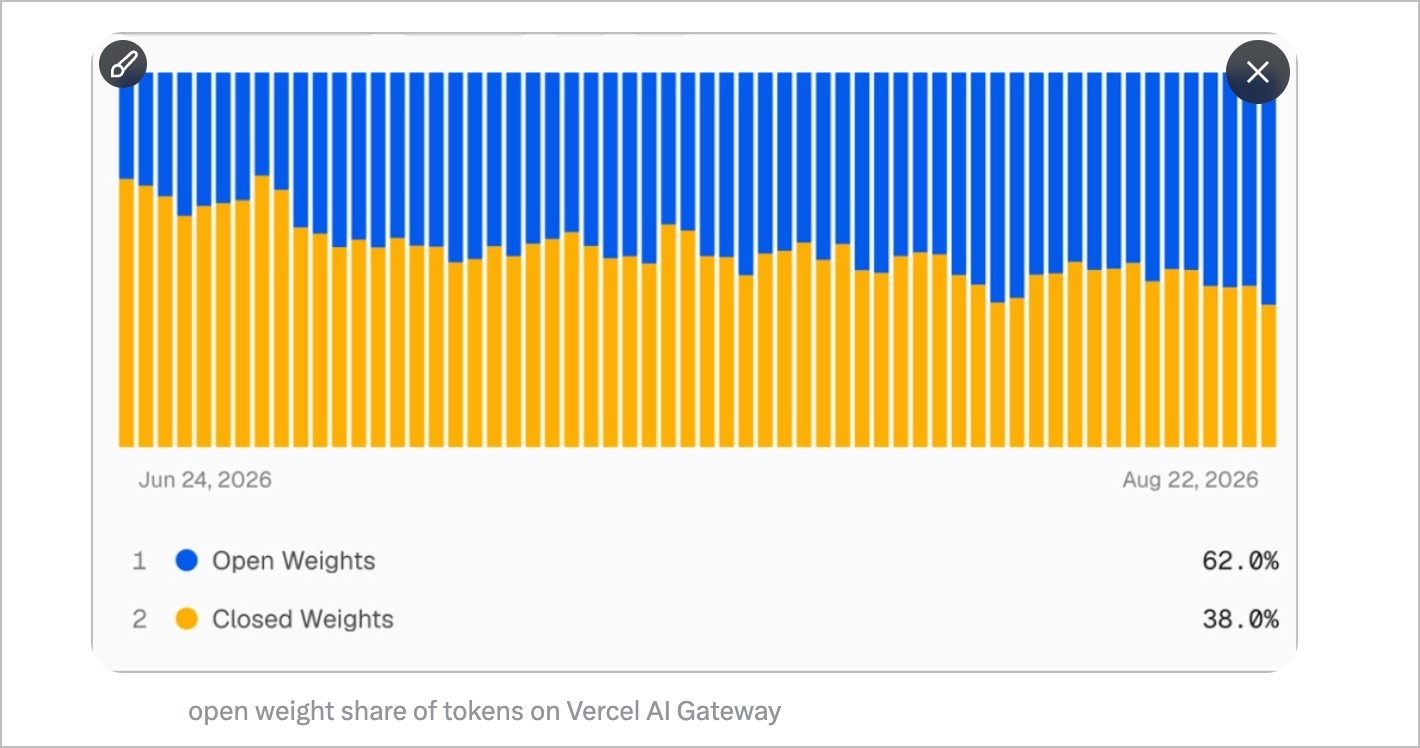
Clem is deeply optimistic about what openness makes possible. The market is proving him right: open-weight share of production tokens jumped from 28% to 62% in just two months.
Over the last seven years Hugging Face has democratized the process of building with AI. Enabling developers to fine-tune and deploy models — large and small, local and cloud — with just a few lines of code. This set off a flywheel for the company and business. And at the core of the company there is something different about them: they are building towards a future that is multi-model, open and closed, local and cloud, small and large. Open models, as Clem put it earlier this year, "contribute to democratising AI, to fighting concentration of power which is, in my opinion, the biggest risk in AI" (source: FT). Speaking of risks, there's a message in here for Europe and the UK.
Clem, Julien, and Thomas are all French. When they came to Betaworks in 2016 we encouraged them to incorporate in the U.S. because it would be easier to raise in the US as a Delaware corp. When the company finished botcamp, we encouraged them to stay in New York, because the technology was so new, and because the US ecosystem was so much more dense and mature, and because the capital was here. But believe you me – we introduced them to the investors in Europe. They tried to make it happen in Europe yet pretty much all the capital they raised was in the US.
I’m half French and half English. I care about the European tech ecosystem. And I care about how Europe navigates the most consequential technological change of our lifetime. For a Europe that is facing profound challenges, now is the time to assert your beliefs and bring European values, taste, and instinct to bear. A lack of confidence in the future translates into a lack of conviction around startups. Europe needs the future and I believe the future needs Europe.
The first chapter of this technology is just getting written. This deal represents an evolution of the stack – and that opens up opportunity. The alternative would be a tightly coupled stack and industry dominated by two labs. Instead the scale and commitment to an open source alternative gives Europe a window to shape how it builds and applies AI. There are risks and reasons to be concerned but the greater risk is not engaging in shaping the future.
Zoom out for a second. The AI transition is a civilizational hinge point. How we architect it determines whether we come out the other side with power concentrated in a handful of leviathan-scale labs. I've held that belief since 2023, and this deal moves the needle toward the distributed side for applications and for physical AI. Which is really an argument about governance. You don't govern a general-purpose technology with policy alone — you govern it with the shape of the market and its infrastructure.
A mix of open and closed models and having open weights is a governance choice: testing, red-teaming, correction, and adaptation stay in many hands rather than few. Which is really about who decides. Every era's answer to that question breaks when the substrate shifts — and we are living through such a shift. Once again we have to ask who watches the watchmen? Increasingly no one — decisions now travel through chains of institutions and agents that no single human sees end-to-end. Governance has to move to the substrate itself. Open and open weights are the anchor of that move — they keep the stack genuinely part-open and part-closed rather than quietly closing over time.
A decade ago, we all made a bet on ambitious, open source AI. By ‘all’, I mean Hugging Face, AI builders , Betaworks, our co-investors, and the LPs that back us. We never wavered in our conviction in this team or category, but this outcome is more than we could have imagined.
Fare forward to a future of actually open + closed AI!
🤗